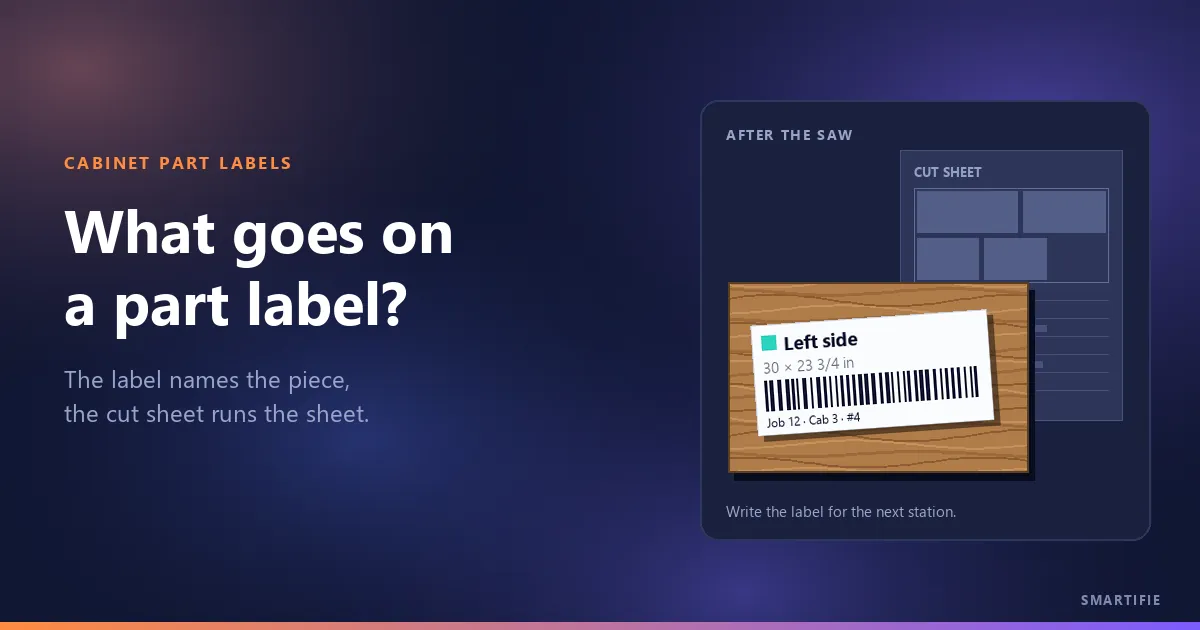
A part label is written for the stations after the saw: the edgebander, boring, assembly. The five fields every label needs, what stays on the cut sheet, how to show edge banding and grain, what a barcode should carry, where and when the label goes on, and roll printer versus a sheet of labels.
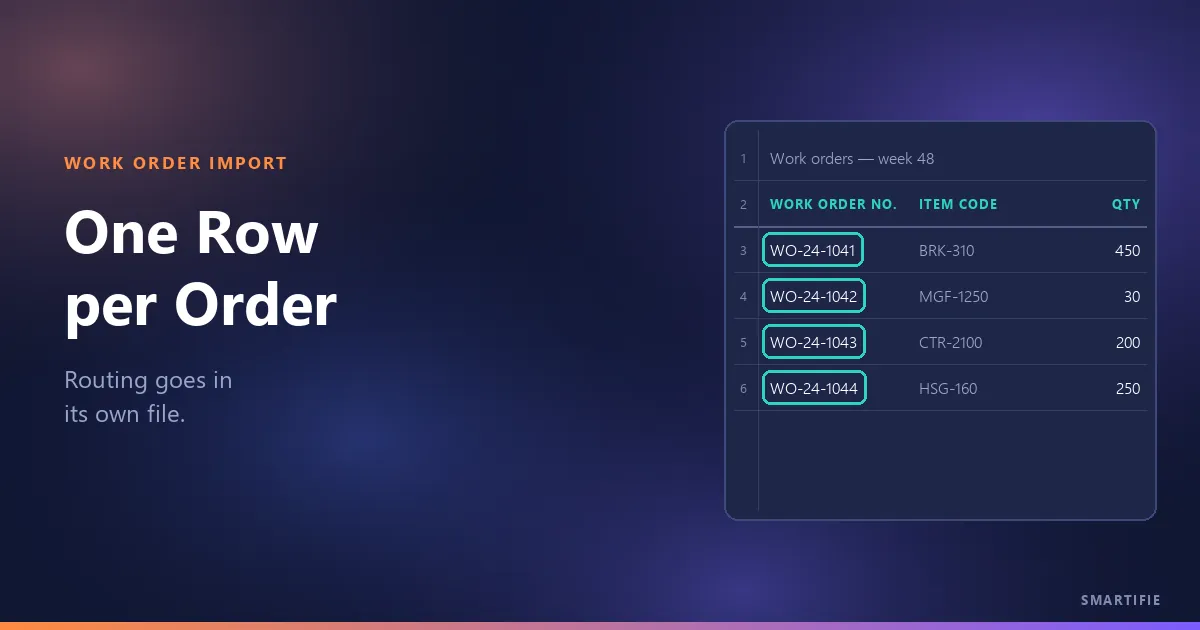
Work order import template: one row per order, routing in its own file
Getting a work order list ready for import comes down to two decisions: one row per order, routing one row per step in its own file, and a number that never changes. Required columns, due dates, loading order and what a second import changes and keeps.

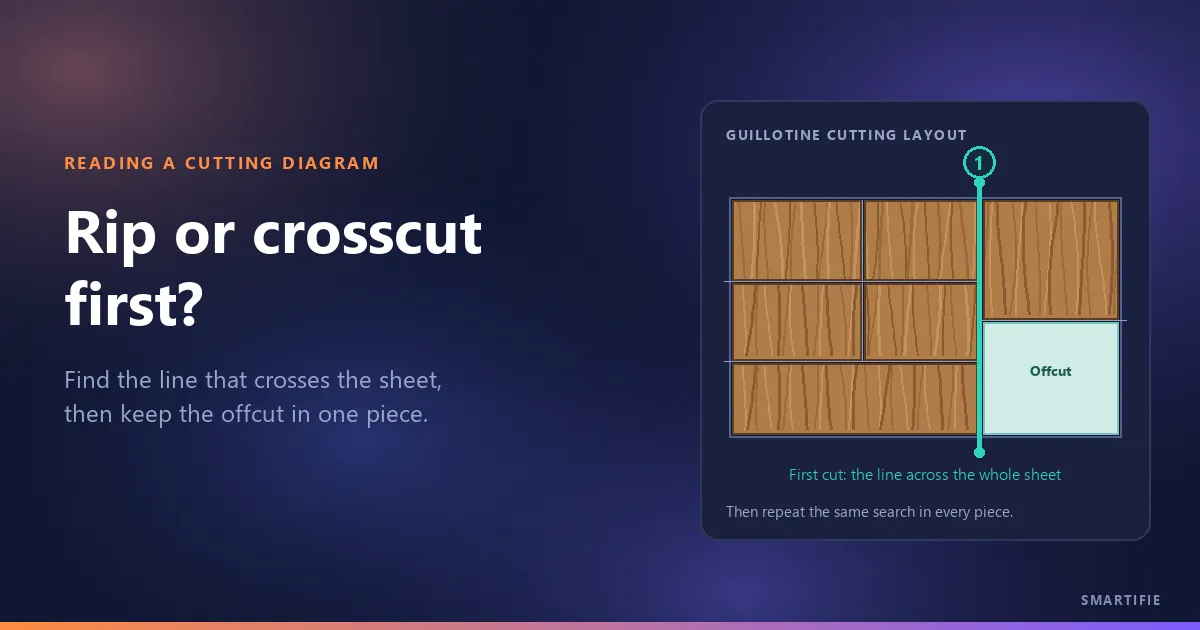
Rip or crosscut first? How to read a cutting diagram before the first cut
Even without sequence numbers, the first cut is written in the drawing: the line that runs unbroken from edge to edge. The plan, the machine and the offcut decide rip or crosscut first. Strips and stages, the four marks on a plan, how the order shapes the offcut, and five checks before the saw.
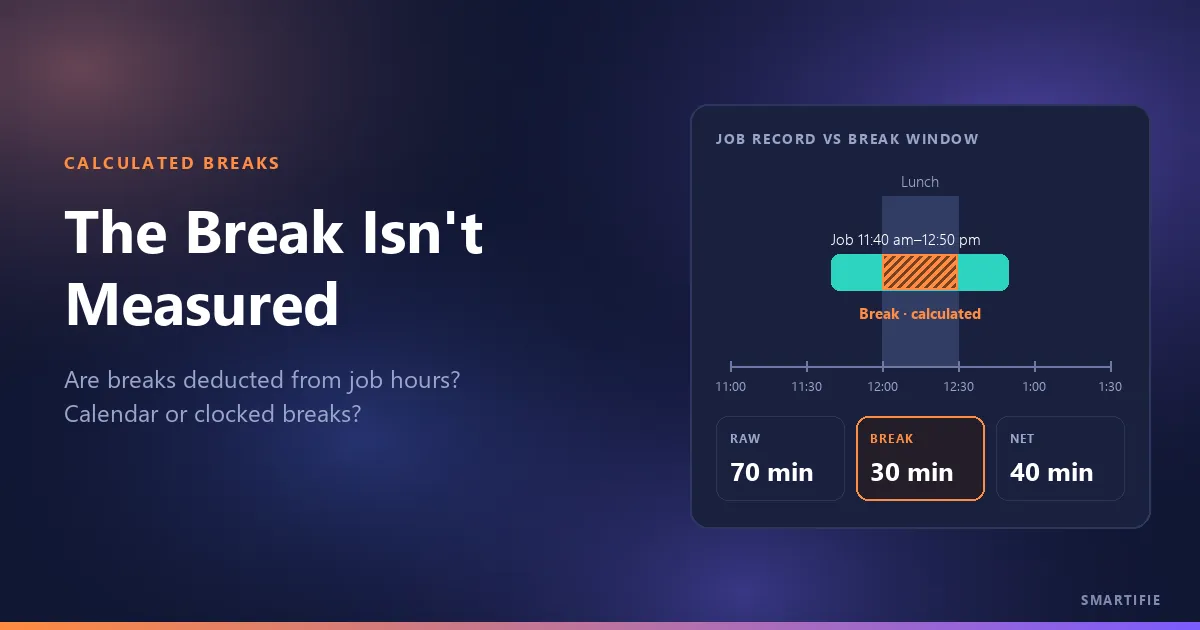
Are breaks deducted from job labor hours? Calculated or clocked breaks
Lunch should come off the hours booked to a job, but a break taken off the calendar is an assumption, not a measurement. How it is worked out, where it goes wrong, and when operators should clock breaks instead.
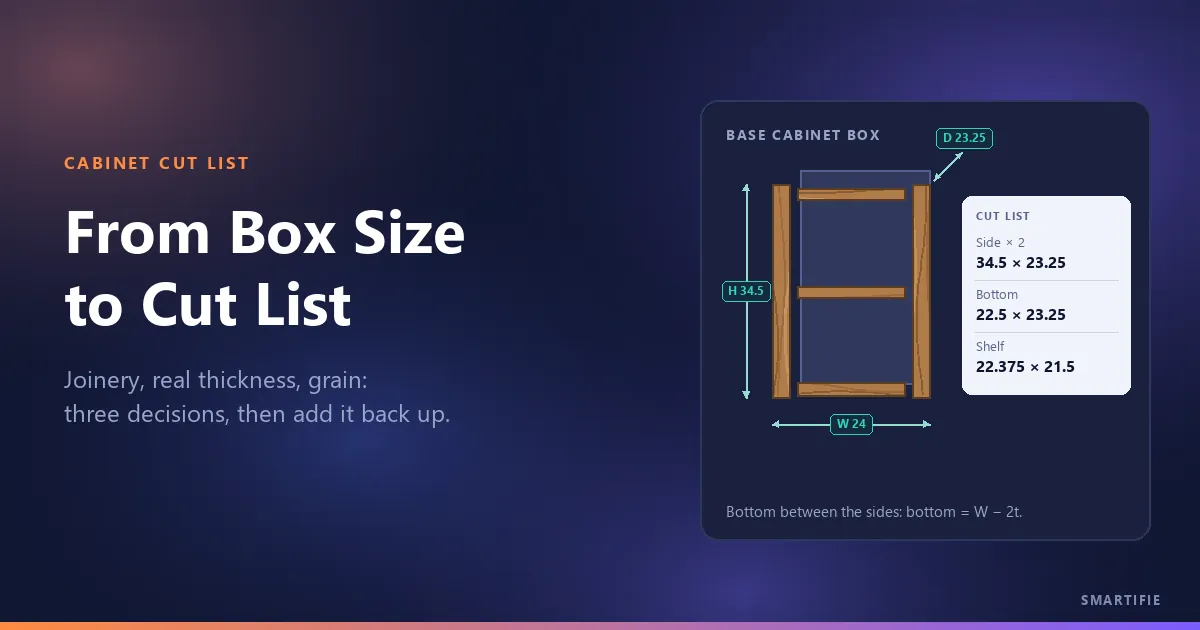
How to make a cabinet cut list from the box dimensions: sides, bottoms, shelves and backs
A cabinet cut list comes from the box size through three decisions: the joinery, the real sheet thickness and the grain. Formulas for sides, bottoms, stretchers, shelves, backs and doors, a three-box example, merging a job's list and adding it back up before you cut.
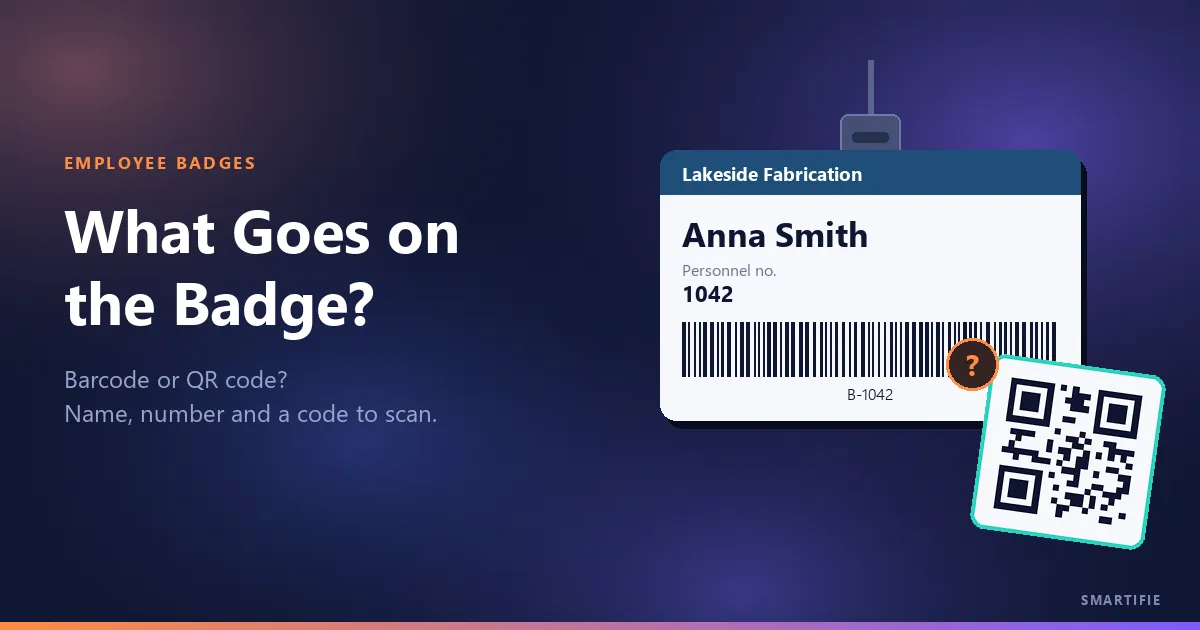
Employee badges: barcode or QR code, and what belongs on the card
On the shop floor, a badge is there to be scanned. What belongs on it and what should stay off? Barcode or QR code, what to build the badge code from, which card size, and what to do about new hires, lost badges and people who leave.
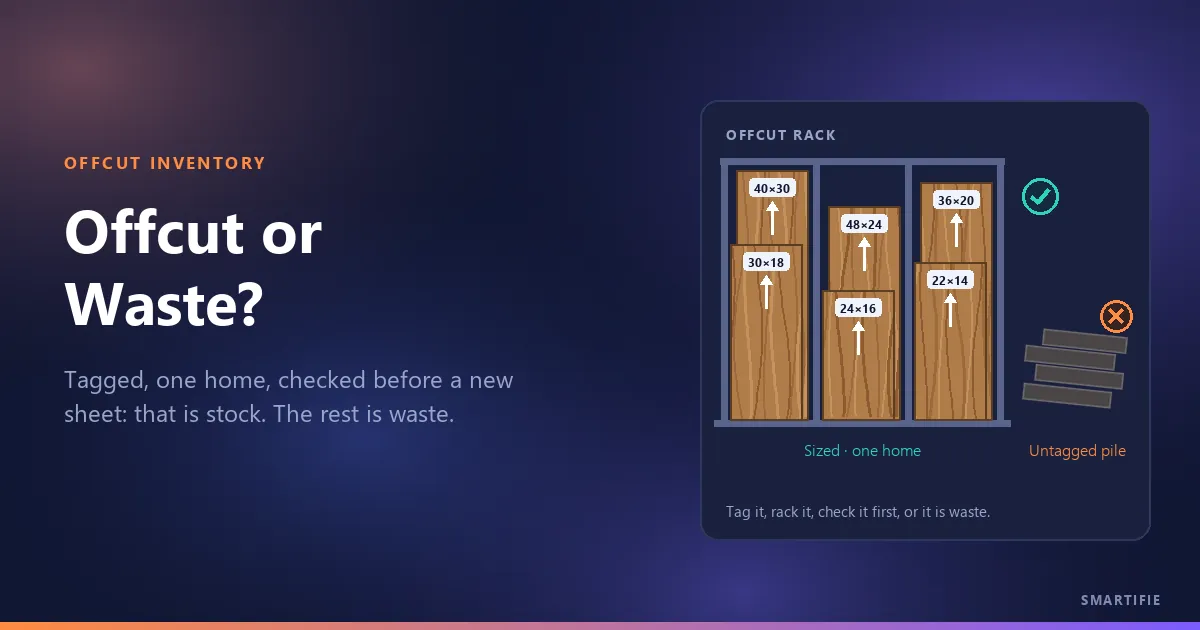
Offcut inventory: which sheet offcuts to keep, how to tag them and when to toss them
An offcut is inventory only if its size is written on it, it has one home and the next plan checks it before a full sheet. Which drops are worth keeping, what goes on the tag, how to set up the rack, what “use offcuts first” costs, why the list drifts from the rack and when to toss.
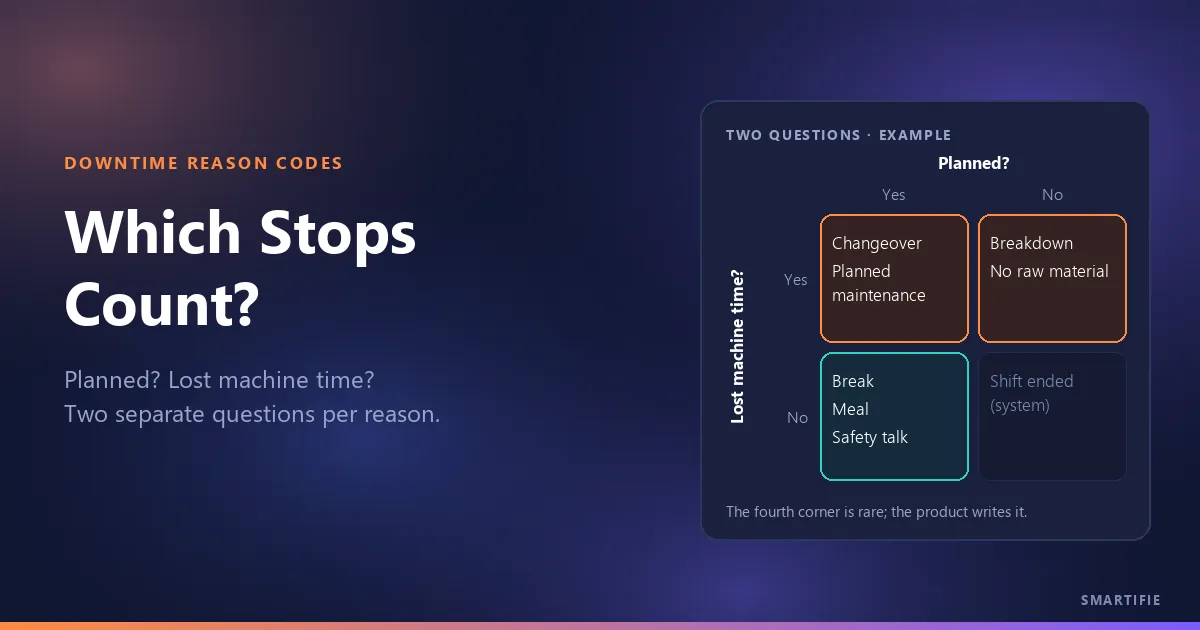
Downtime reason codes: planned, unplanned, and what counts as lost time
How many downtime reason codes do you need, how should they be named and grouped into categories? Is a changeover planned downtime, and should breaks count? Two separate questions on every reason, an example list for a small shop, and what to do with reasons operators type in and reasons you no longer use.
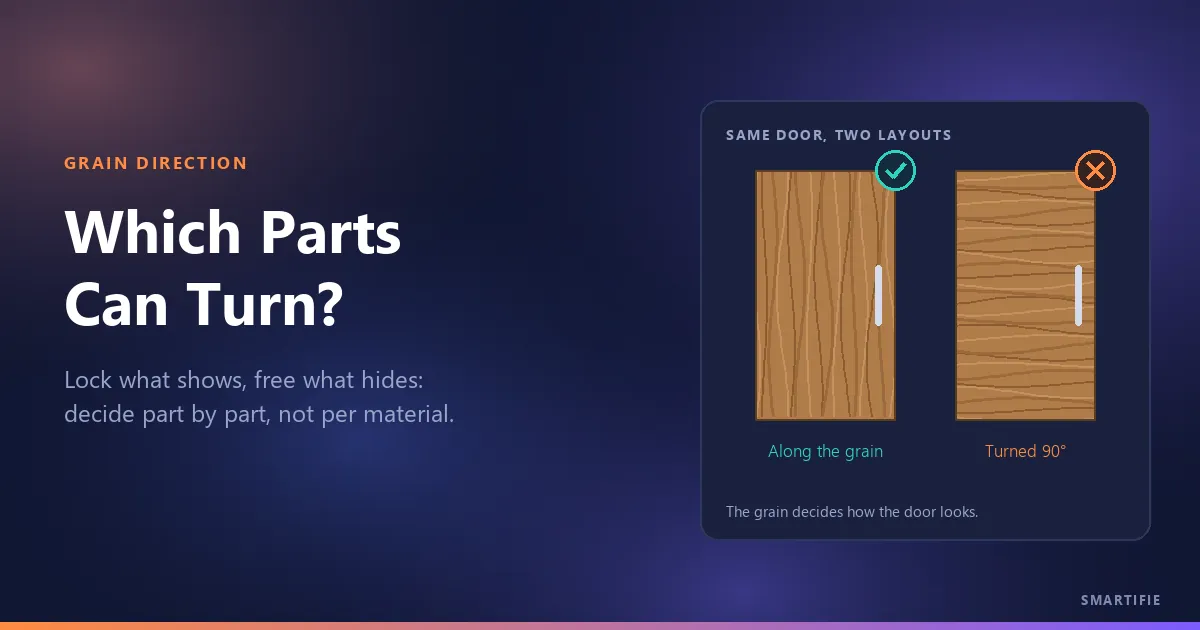
Does grain direction matter? Which parts to lock on a cut list
Which parts follow the grain and which can turn? Why doors, finished ends and drawer fronts get locked while backs and drawer bottoms stay free, whether shelves are about looks or strength, how to measure what each lock costs, and whether the rule belongs on the material, the sheet or the part.
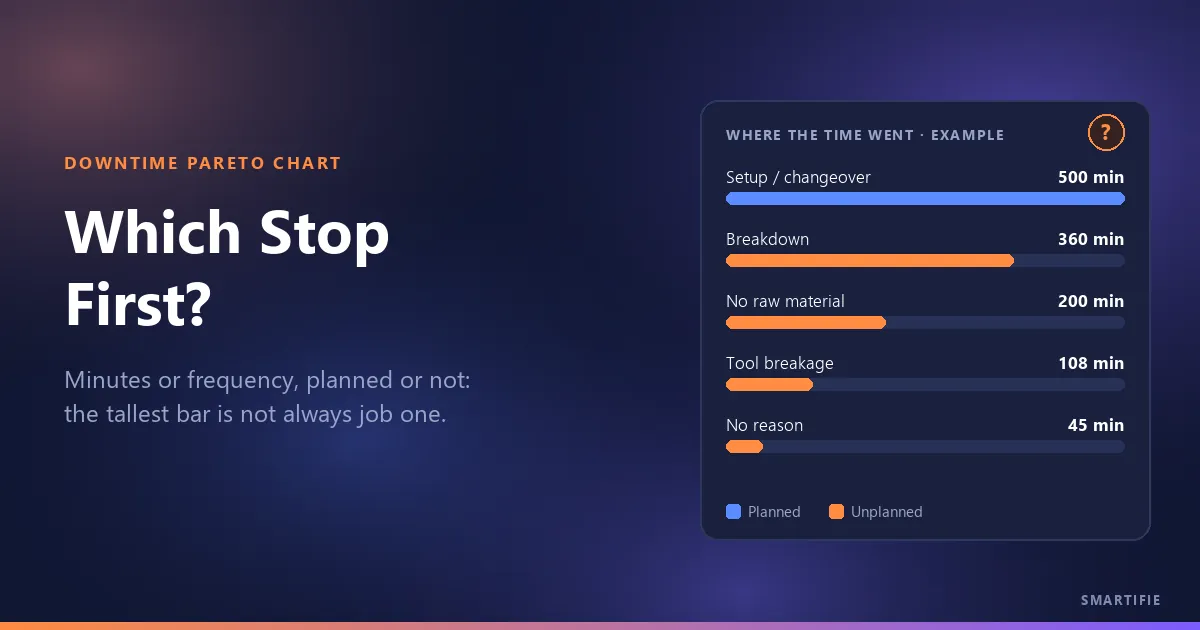
Downtime Pareto chart: which stop do you fix first?
The downtime Pareto is in front of you: which stop do you fix first? Minutes or count, how to work out the cumulative percentage by hand, what the “No reason” and “Other” bars are telling you, whether planned stops belong on the chart, and why the tallest bar is not always job one.
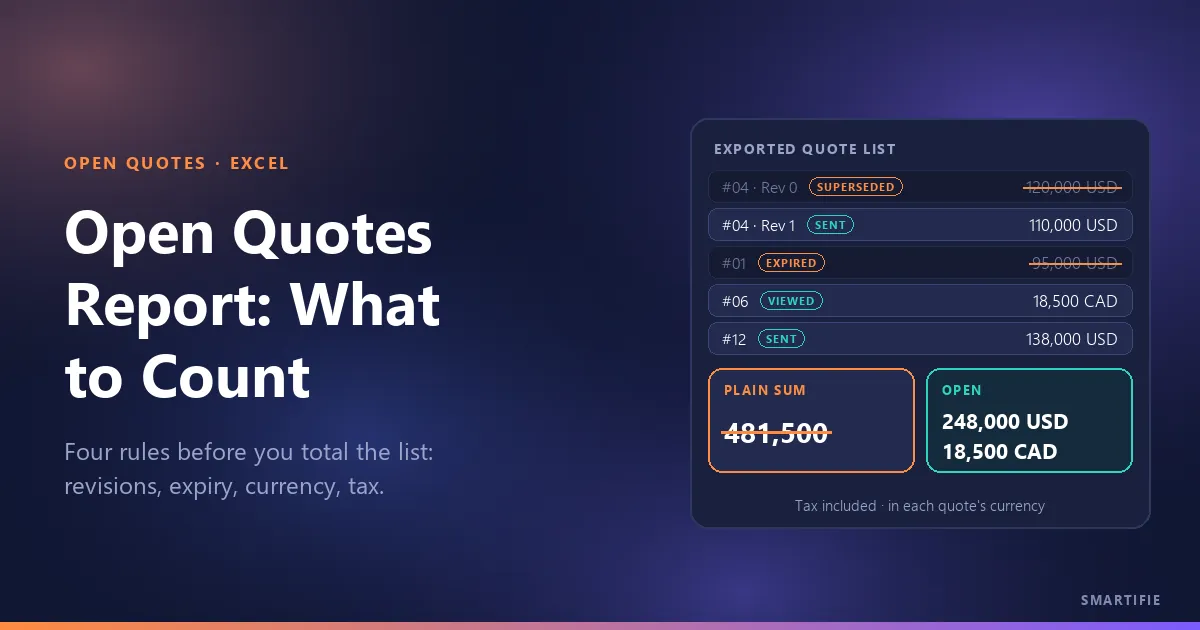
Open quotes report: what to count before you total the list
At month-end someone asks how much is in open quotes. Exporting the list is easy; adding up the Amount column is where the figure goes wrong: revisions counted twice, expired quotes still open, US and Canadian dollars in one sum, a tax-inclusive total next to a net target. Four rules before you total it.
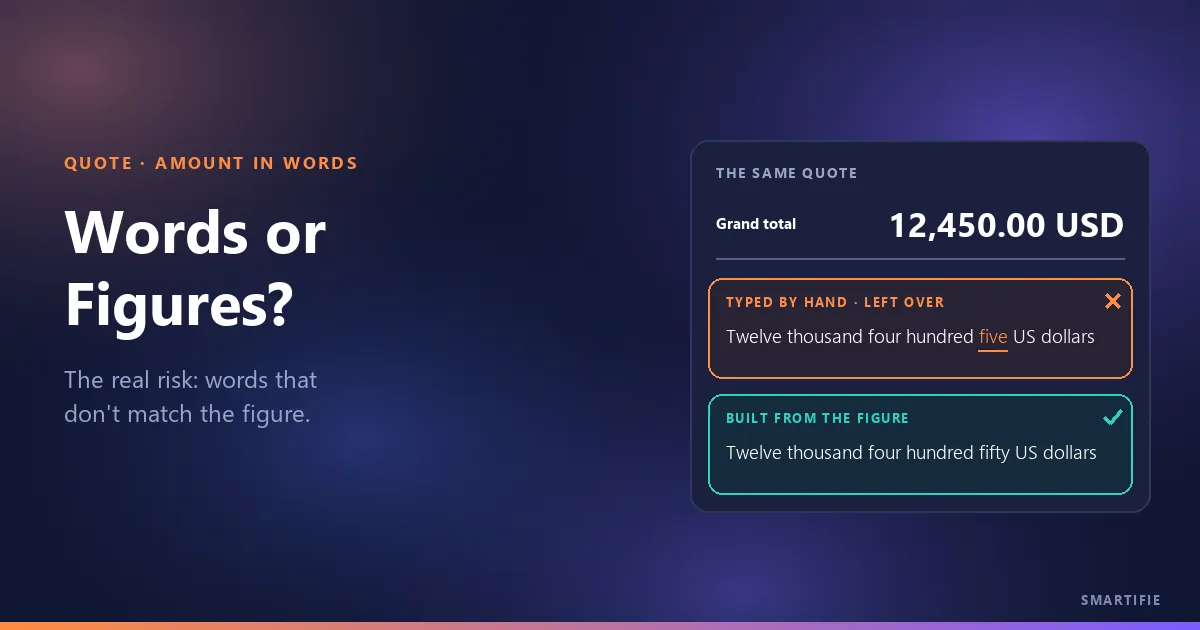
Amount in words on a quote: do you need it, and which counts if words and figures differ?
The buyer wants the total spelled out. On a check the words prevail over the figure by law; a quote has no such rule. The real risk is not missing words but words that drift from the figure in a revision. Three rules for writing it, and one sentence that says which one governs.
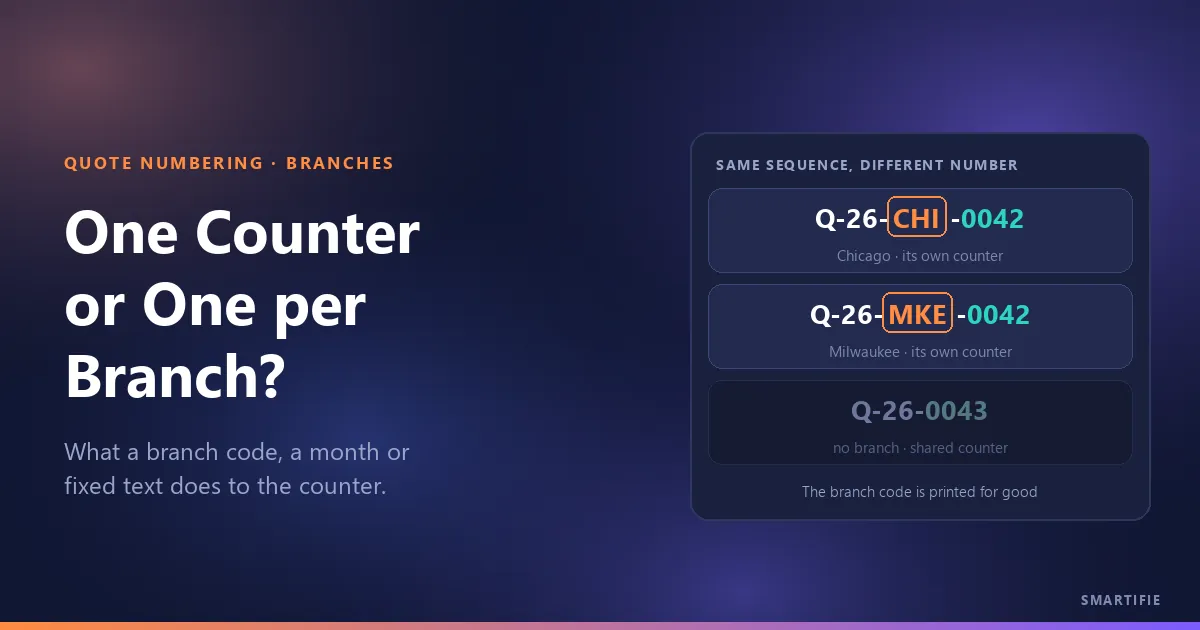
Quote numbering for multiple branches: one counter, or one per branch?
A customer calls about “quote 42”. If each of your branches keeps its own counter, there are two of them. One counter or one per branch? How to pick a branch code, where a quote saved without a branch lands, and what a month or fixed text in the number does to the counter.
How to prepare a price list and customer list for import: 7 checks before you upload
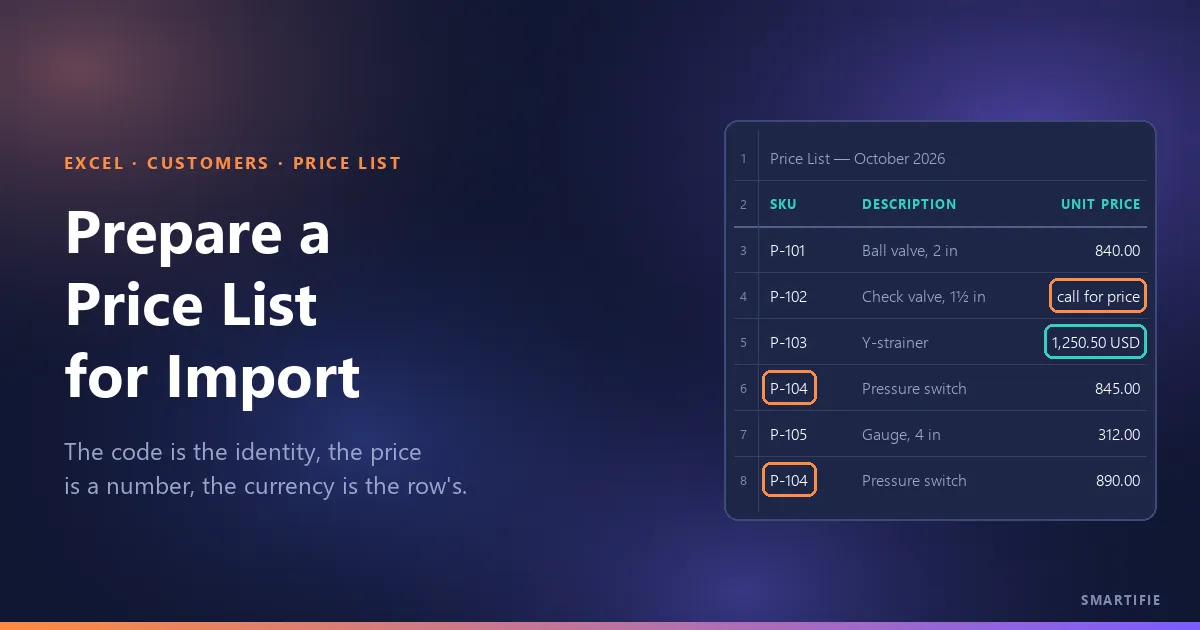
“Call for price” in the price column, a currency sign next to the number, a price increase added as a second row, a tax ID that lost its leading zero. Seven things to check before you import a price list or customer list from Excel, and the rule for re-importing the corrected file without duplicates.
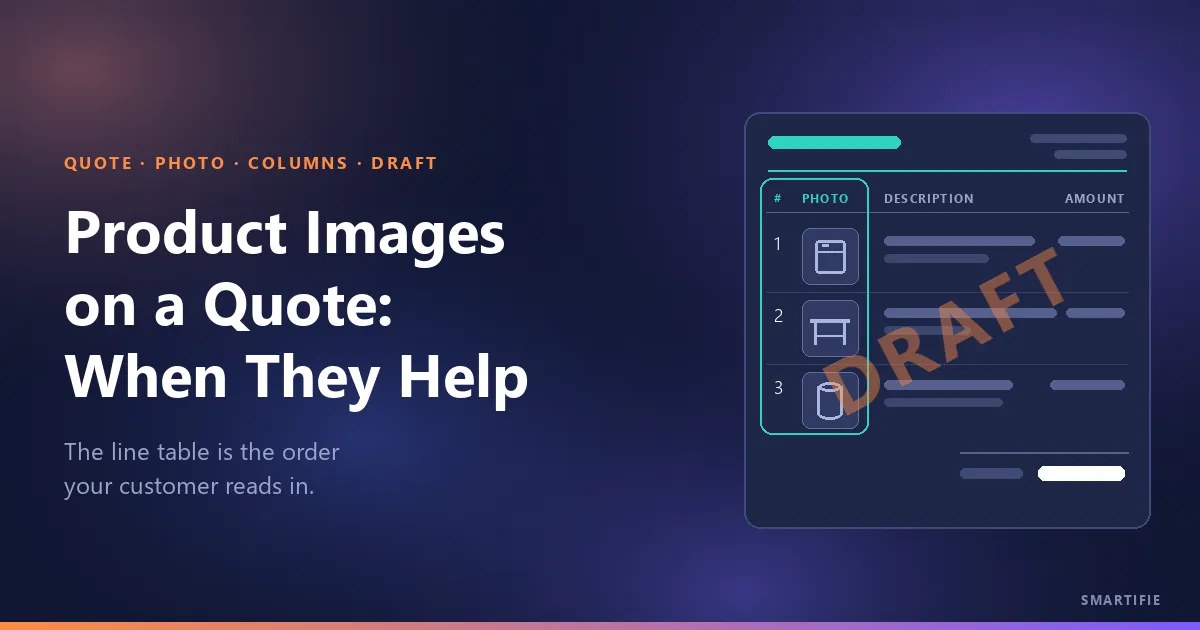
Product images on a quote: when they help, where they go, and why drafts get stamped
Two items that differ by one letter in the code look identical on a quote, until the wrong one is delivered. When a product photo earns its place, when it just makes the table longer, whose order the columns should follow, and why a draft stamp is not a style.
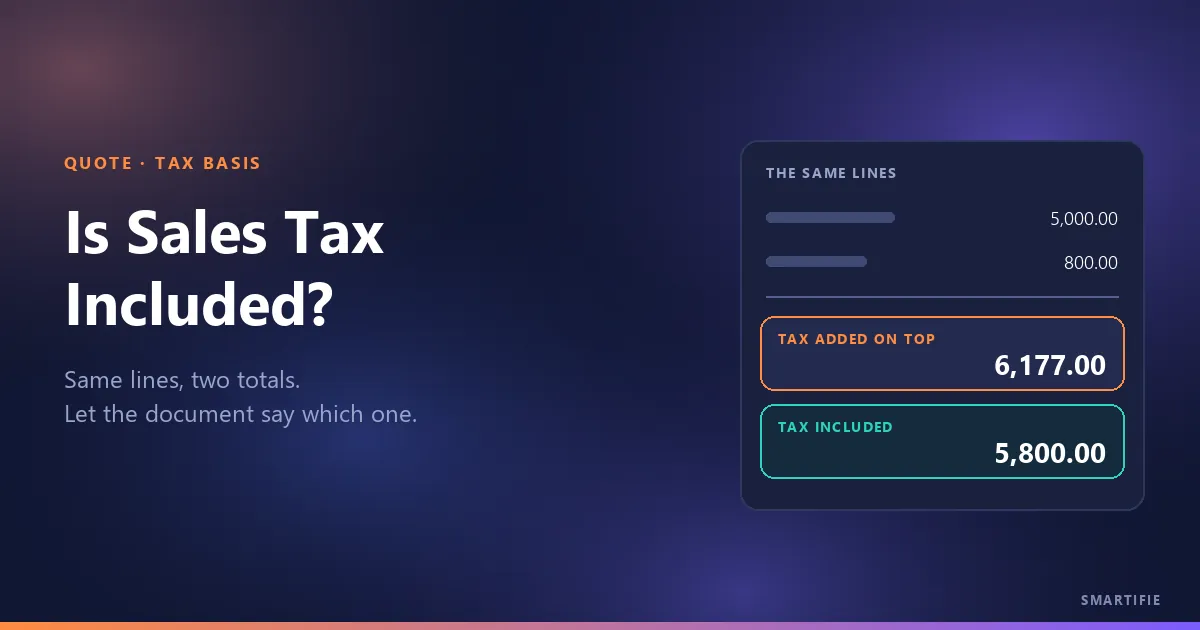
Does a quote include sales tax if it doesn't say? Same lines, two totals
A quote that is silent on sales tax is really two prices: the same two lines can read 5,800.00 or 6,177.00. Washington presumes the price excludes tax; California looks to the agreement; consumer pricing is stricter still. Whichever rule applies, one sentence on the document keeps the decision in your hands.
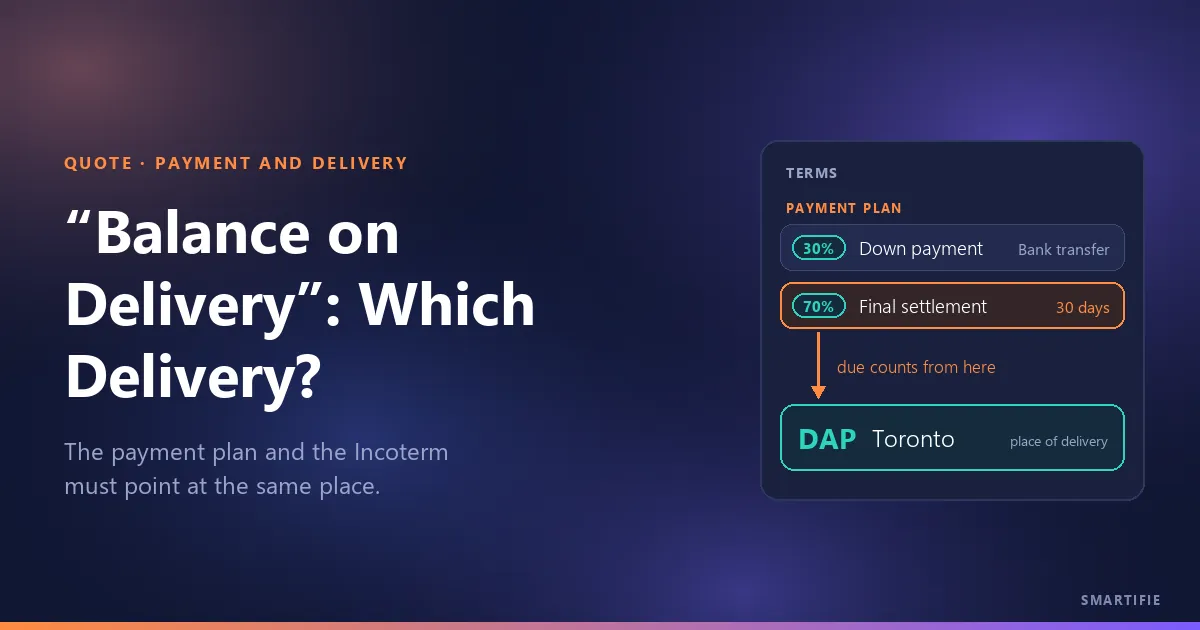
Payment terms and Incoterms on a quote: “balance on delivery” — which delivery?
To the seller, delivery is the day the goods leave the dock; to the buyer, the day they arrive. If the “balance on delivery” in your payment plan and the Incoterm on the quote don't point at the same place, the due date lands on two different days. The fifth part of a payment row: the event the days count from.
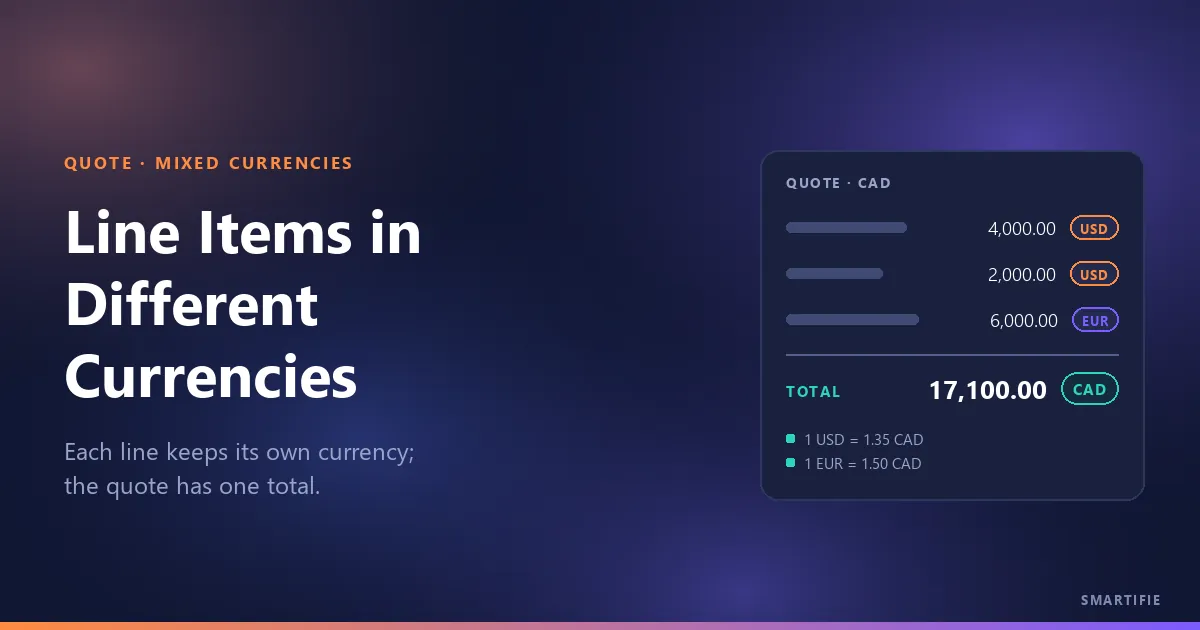
Quote line items in different currencies: one total, one rate per currency
Some lines are in dollars, one is in euros, and the customer wants a single total in their currency. The quote currency, converting line by line, one dated rate row per foreign currency, and why a missing rate must never count as 1.
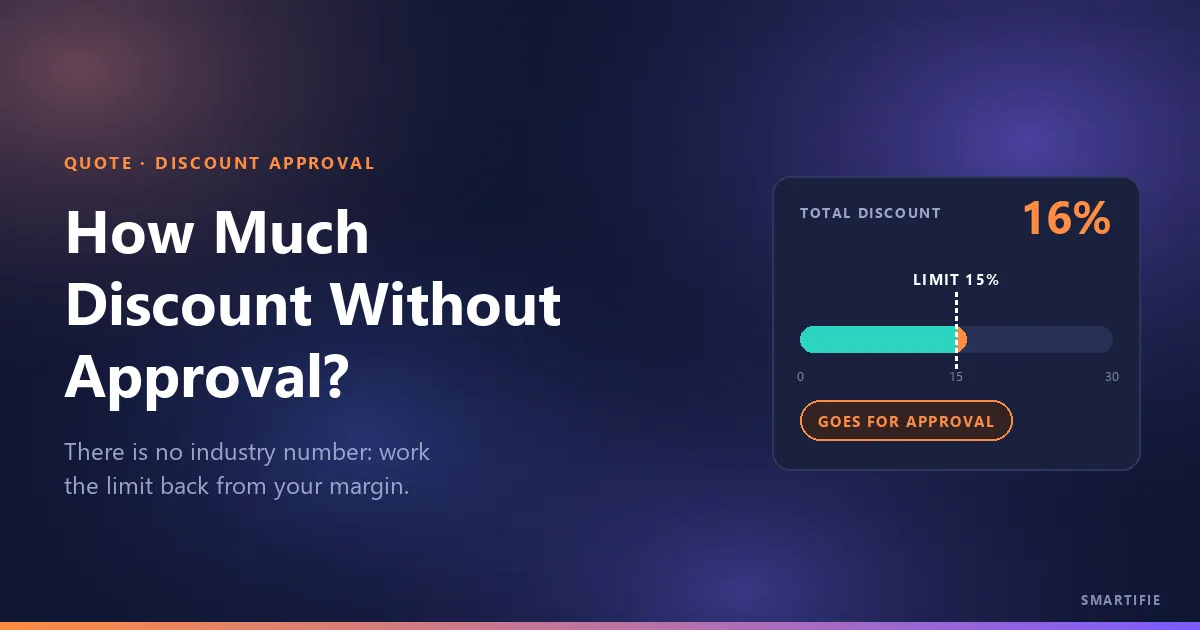
How much discount can a sales rep give without approval?
How much can a rep discount before someone else signs off? There is no standard number. Work the limit back from your margin, know when a dollar threshold helps, and keep approval simple in a small team.
How to edit a quote after it has been sent: create a revision, retire the old one
The customer has opened the quote and wants changes. When to correct and when to revise, why the number stays the same, why the old version must not stay acceptable, and how to prove what was sent.
What should a labor ticket record for each job on the shop floor?
The ticket is filled in, but the hours never add up. The seven fields a job record needs, why setup and run are kept apart, raw vs. net time, good/scrap/rework counts, and why job hours rarely match the time clock.
VAT rounding on a quote: per line or on the total?
The customer added up the quote and got a penny less. What rounding per line and on the total each protect, half-up vs banker's rounding, discount order, VAT-inclusive prices and the payment plan's leftover penny.
Cut list waste percentage: what it counts, and whether offcuts are waste
Your optimizer says 18% waste, but what does that count? Denominators, the five kinds of loss, gross vs net waste, when offcuts stop being waste and how much stock to order.
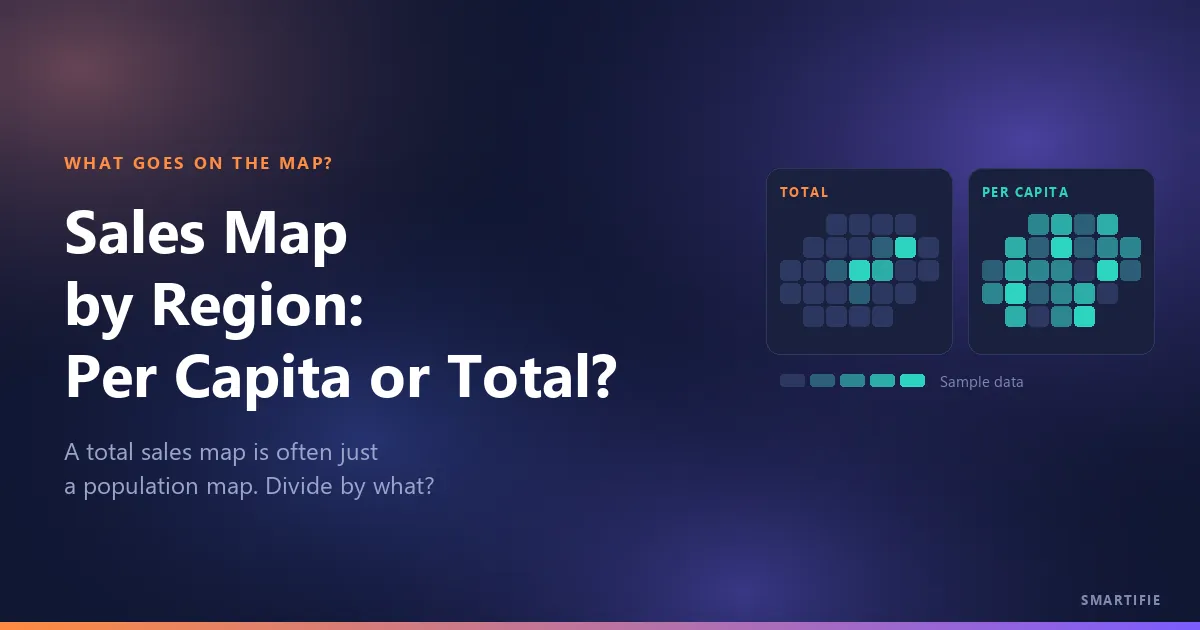
Sales Map by Region: Per Capita or Total?
A totals map often just redraws the census. Per capita, per customer or an index: which denominator answers which question, and why small regions mislead.
Quote Number vs Proforma Number: Same Series?
A quote number's shape is yours to pick, but the counter is separate: changing the format never renumbers old quotes. Why proforma needs its own series.
What to Include in an Export Proforma Invoice
HS code, country of origin, Incoterm, bank details — the fields an export proforma needs already exist in Quote, just hidden by default. Where to turn them on.
Quote Stuck in Pending Approval? Here's Why
A quote above the discount or amount threshold can't be sent and just sits waiting — with no notification to the approver. What actually happens.
Quoting in Foreign Currency: Which Rate Goes on the Quote?
You quoted at one rate and the buyer accepted at another. The question is not which rate is correct but whether the document says on which date the rate was fixed.
Fixed Bin Locations or Chaotic Storage?
Should every SKU own a bin, or should goods go wherever they fit? What decides it is not efficiency but whether every put-away is recorded as it happens.
Vehicle and Driver Details on a Delivery Note
The plate on the document is not a formality, it is the identity of the shipment. What to do when it is unknown at loading, and when the truck changes.
Invoice Unit Code for Boxes and Cartons
A box is not a unit of measure, it is a container. Quantity unit and packaging type are two fields, and the package count is usually left blank.
Opening Stock When Switching ERP Systems
The migration list comes from accounting, but every answer on it lives in the warehouse. Item codes, units of measure and pack sizes are decided on the dock.
Packing List Abbreviations: CTNS, PCS, N.W., G.W.
Knowing what an abbreviation means gets you nowhere; knowing which document it belongs to does. One shipment shows up as three different numbers.
Do I Need a GS1 Barcode or My Own Numbers?
One question decides it: will this code ever leave your system? If it does, the number must be allocated by GS1; if not, you design your own scheme.
Warehouse Bin Location Naming Convention
Aisle, rack, level and bin: the decisions behind a location code. Fixed digit width, ambiguous characters and numbering that survives the next aisle.
Carton Marking: Shipping Marks on Export Boxes
Main mark, side mark and handling symbols: which parts of an export carton's marking are actually mandatory, and which are set by the contract?
Delivery Note Names in Spain and Latin America
Albarán, remito, nota de remisión, guía de remisión: one document, six names. Where a tax authority has to clear it before the truck leaves.
Pallet Damaged in Transit: Who Is Liable?
Loading, stowing and packing are the sender's side of the job. Six rules for building a pallet that survives, and what to record before the truck moves.
When Do Loading Photos Actually Count as Proof?
Which shots to take before the truck leaves, why the timestamp inside the file is not the one that counts, and what a photo has to be attached to.
What to Do When a Delivery Does Not Match the Packing Slip
The driver is waiting and the count is wrong. What to check first, what to write before you sign and where that writing has to land to count.
How to Verify a Load by Scanning Barcodes
What scanning at the dock actually catches: four kinds of rejected scan, partial loads and what to do when the system is offline.
What to Put on a Carton Label
What belongs on a carton label, how much data a barcode can carry and whether you need an SSCC. A field-by-field checklist from the warehouse.
How to Write a Delivery Note
What it must carry, when it is issued and how it differs from an invoice, plus the warehouse sequence from loading order to signed note.
What Is a Picking List?
What a picking list carries and how it differs from a packing list. Four picking methods and four ways to cut errors.
How to Prepare a Packing List
Which fields it must carry, how it differs from a delivery note and an invoice, and which mistakes stop a shipment.
Why Spreadsheets Stop Working for Shipment Tracking
Spreadsheets work at low volume but break as package counts grow. Seven bottlenecks and three concrete thresholds that say it is time to switch.
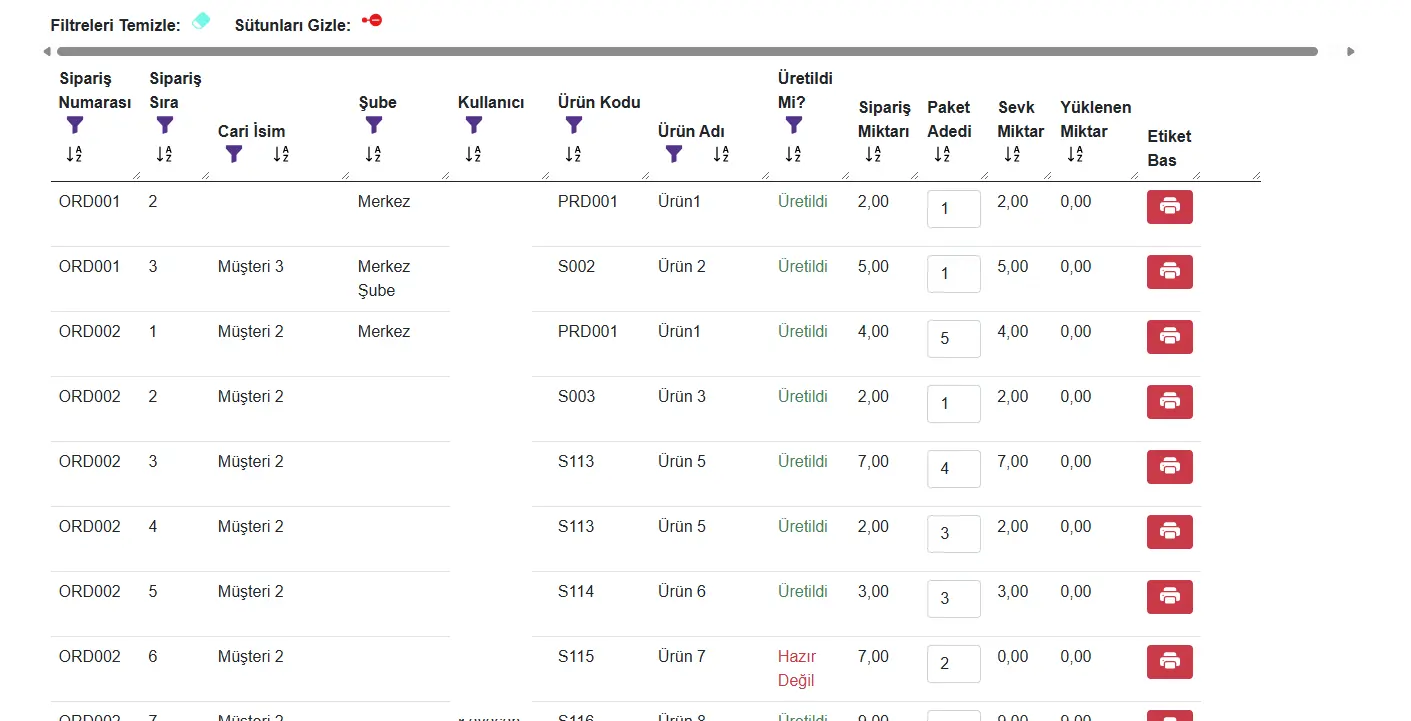
How to Print Shipping Labels with Smartifie Logistic App
Use the Print Label screen step by step: filter orders, set package counts and print barcoded PDF labels in one click.